

Bleiswijk first appears in the twelfth century as a peat-reclamation village. Here, on the eastern side of the Rotte, ditches were dug to drain the wet peat. What emerged was a wet polder landscape with rows of houses along the drainage ditches. From the late Middle Ages, much peat was cut here as fuel — fuel for the growing cities of Delft and Rotterdam, which could not have heated without these villages.
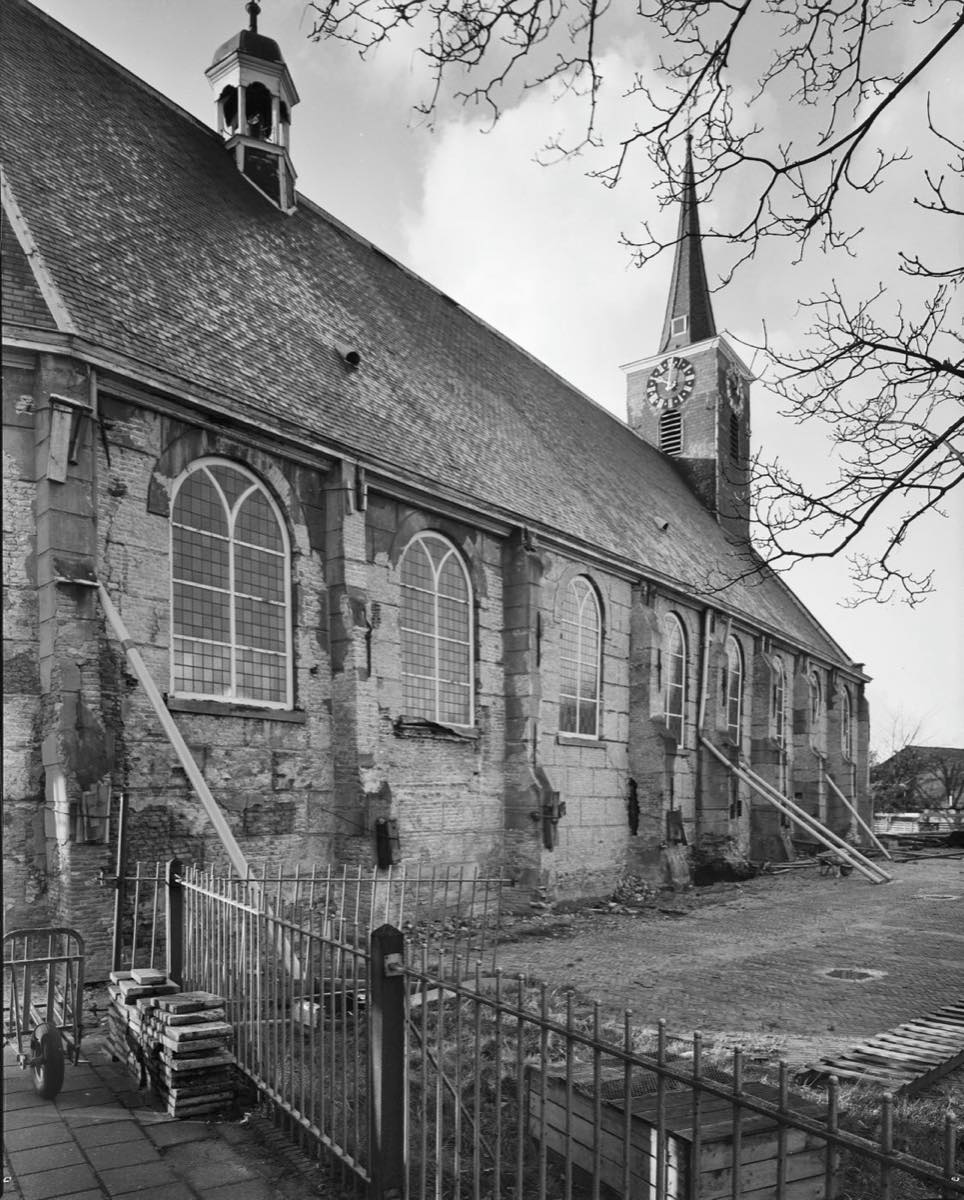
In 1772 one of the most impressive infrastructure works of the region began in Bleiswijk: draining the Bleiswijk polder. Seven mill complexes pumped out the lakes, and within ten years the water was gone. That same year the Bleiswijkse Verlaat was built — a lock that bridged the height difference between the elevated Rotte and the lower-lying polder, so that ships with peat, grain and building materials could keep sailing. The photo above shows the north wall of the old village church — a seventeenth-century building at the heart of the village.
In 2007 Bleiswijk merged with Berkel en Rodenrijs and Bergschenhoek to form the municipality of Lansingerland. The old village has been preserved — with its church, the Bleiswijkse Verlaat and the polder landscape — but new neighbourhoods have been built rapidly around it for commuters from Rotterdam and The Hague. Bleiswijk has also become one of the largest greenhouse-horticulture areas in the Netherlands; on the edge of the village growers are building greenhouses the size of football fields.
Living in Bleiswijk means living on drained peat with a full schedule. We run set pickup days through the village and the polder neighbourhoods. Your bag goes along in the morning, and comes back in the evening clean and ironed with the same driver. No appointments, no detours — just your laundry folded back in the closet.
How Wastas works in Bleiswijk
On the set pickup day our driver is at your door. Clean laundry comes back by appointment — folded or on hangers, however you like it.
Other municipalities nearby
Sign up in two minutes and schedule your first pickup.