

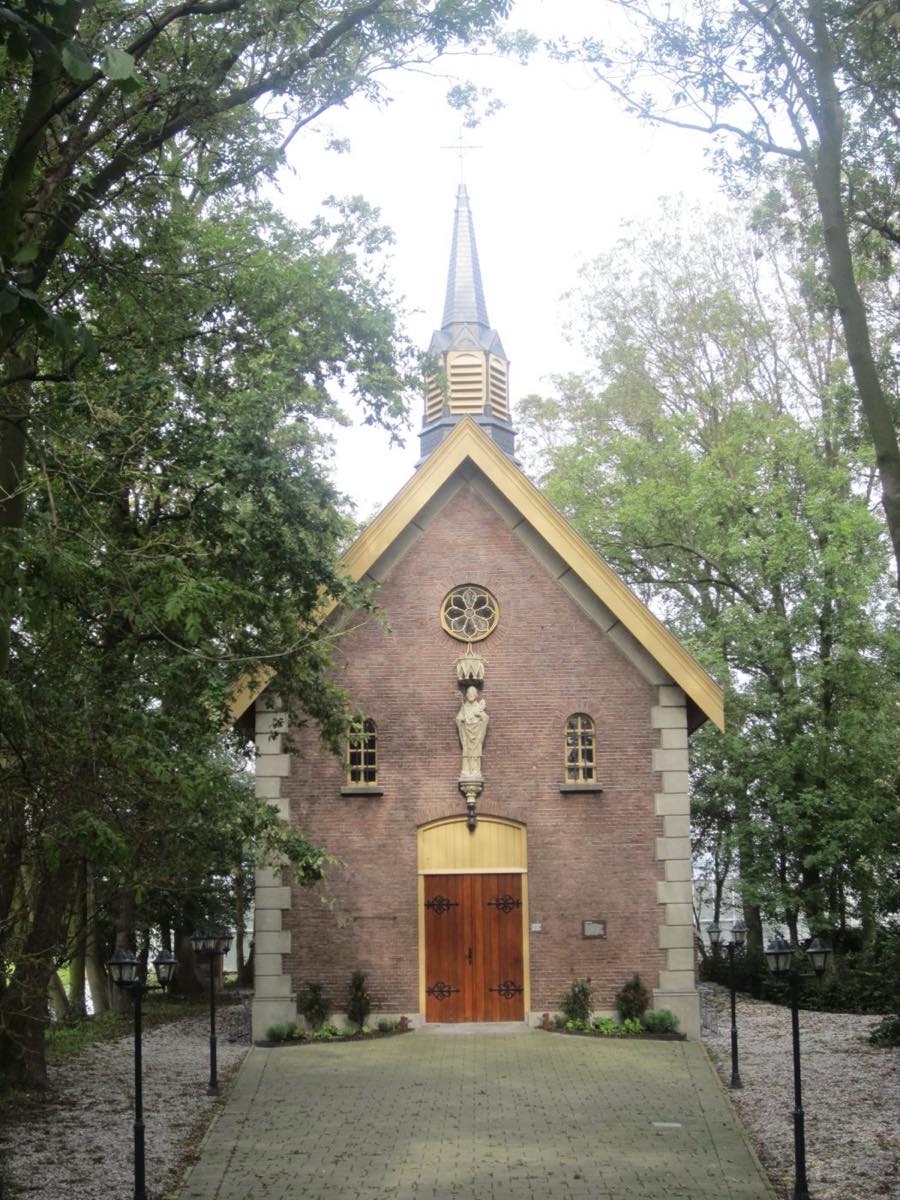
's-Gravenzande received city rights as early as 1246. Count William II granted them on the advice of his mother Machteld — earlier than Rotterdam (1340), earlier than Amsterdam (1300). For its time an unusual status: 's-Gravenzande had both low and high jurisdiction, meaning even corporal punishments could be imposed. The text of those city rights is one of the oldest preserved from Holland.
's-Gravenzande never grew large. It is the only place in the Westland that was ever called a city, but it remained a village of about a thousand inhabitants well into the twentieth century. The Lambertuskerk on the square — visible in the photo above, although the current design dates from 1872–1873 — still dominates the village core. Hardly anything remains of the medieval city walls and harbour. What remains is a compact square, a market and the pride of a place that count and countess elevated to a city.
Between 's-Gravenzande and the coast a strip of dunes and meadow still lies. That landscape has long preserved the Westland village feeling. Only in the twentieth century did neighbourhoods spring up, and today 's-Gravenzande is one of the larger village cores of the Westland municipality. Commuters who work near The Hague or Rotterdam, growers and trading families now live side by side here.
Living in 's-Gravenzande means having sand, coast and space within walking distance. But the days aren't longer for it. We run set pickup days through 's-Gravenzande — the centre, Rozenhof, Zandhove and Heenweg. Your bag is ready in the morning, and comes back in the evening clean, ironed and folded. Same driver, same time, every week. That's how Wastas works here — in the oldest city of the Westland, without fuss.
How Wastas works in 's-Gravenzande
On the set pickup day our driver is at your door. Clean laundry comes back by appointment — folded or on hangers, however you like it.
Other municipalities nearby
Sign up in two minutes and schedule your first pickup.