

Pijnacker has existed since around 975. People settled then on the clay soil at the edge of the great peat layer that had grown here for centuries. They made the peat usable by draining and reclaiming it: digging ditches, draining, pumping. So a village arose amid polders, with the simple but sweaty reality that all the work for the harvest — and the household — was done by hand.
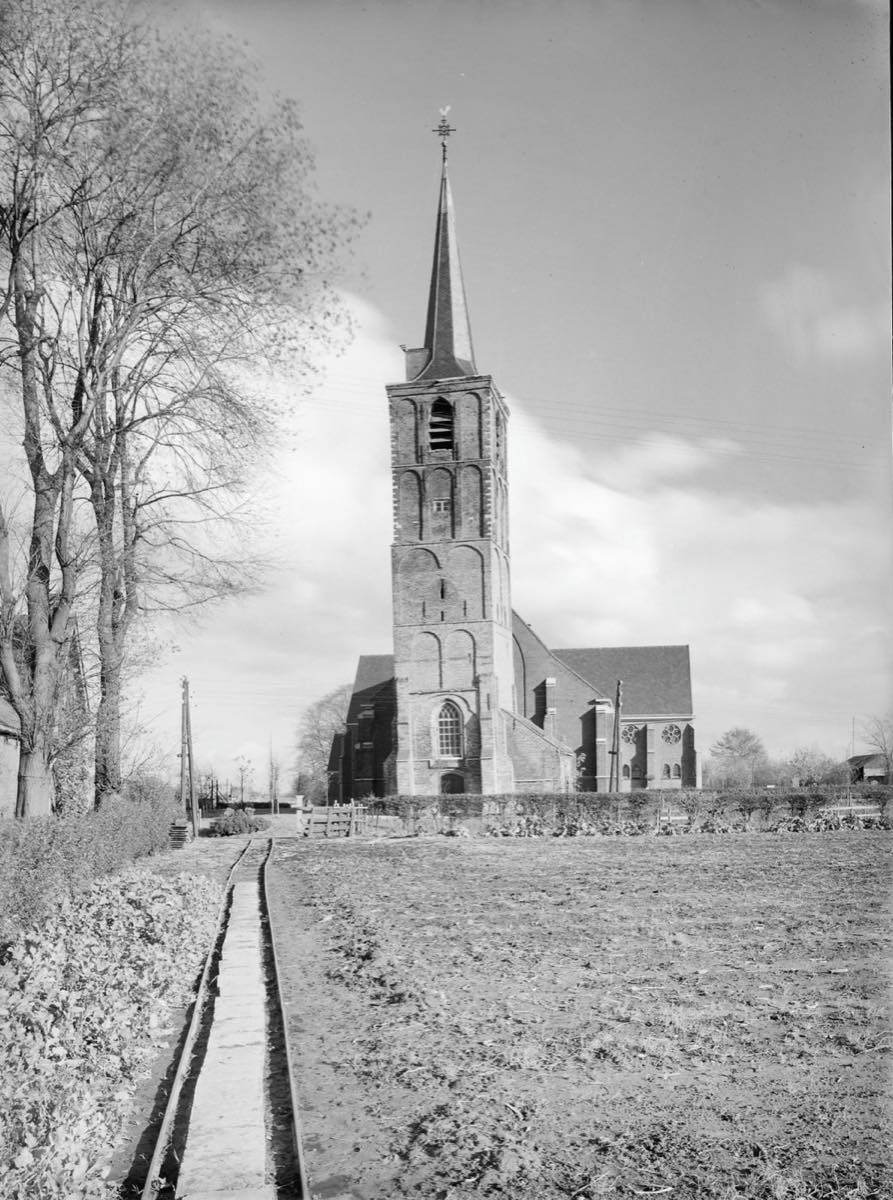
In the sixteenth century a second wave of reclamation began in Pijnacker and Nootdorp: peat-cutting. Residents dug peat from below the surface, dried it as fuel, and when the surface peat was exhausted they dredged further below the water table. That created huge lakes, drained one by one in the eighteenth and nineteenth centuries. What remained was a mosaic polder landscape — and a church in the centre, the oldest part of which dates from the sixteenth century. The photo above, from 1936, shows that church from the west.
In the twentieth century came greenhouse horticulture. From the Westland the sector spread eastwards, and Pijnacker, Delfgauw and Nootdorp emerged as horticultural centres — conveniently between The Hague and Rotterdam. Today Pijnacker is mainly a commuter municipality, with new neighbourhoods like Keijzershof and Tolhek on top of the old polder structure.
We run set pickup days through Pijnacker — through the old centre, Keijzershof, Koningshof and Delfgauw. Your bag is ready in the morning, your driver takes it, and in the evening it returns clean, ironed and neatly folded. Same driver, same time, every week. No appointments, no laundry mountain in the living room — just your routine made one task lighter.
How Wastas works in Pijnacker
On the set pickup day our driver is at your door. Clean laundry comes back by appointment — folded or on hangers, however you like it.
Other municipalities nearby
Sign up in two minutes and schedule your first pickup.