

Nootdorp is first mentioned in 1281, as a 'safe road' across the peat — where the Veenweg now runs. Peat reclamation was already in full swing: people had drained the swampy land, equipped it for farming and gradually turned it into a village. The old village church has a tower built around 1230, making it one of the oldest buildings in the area.
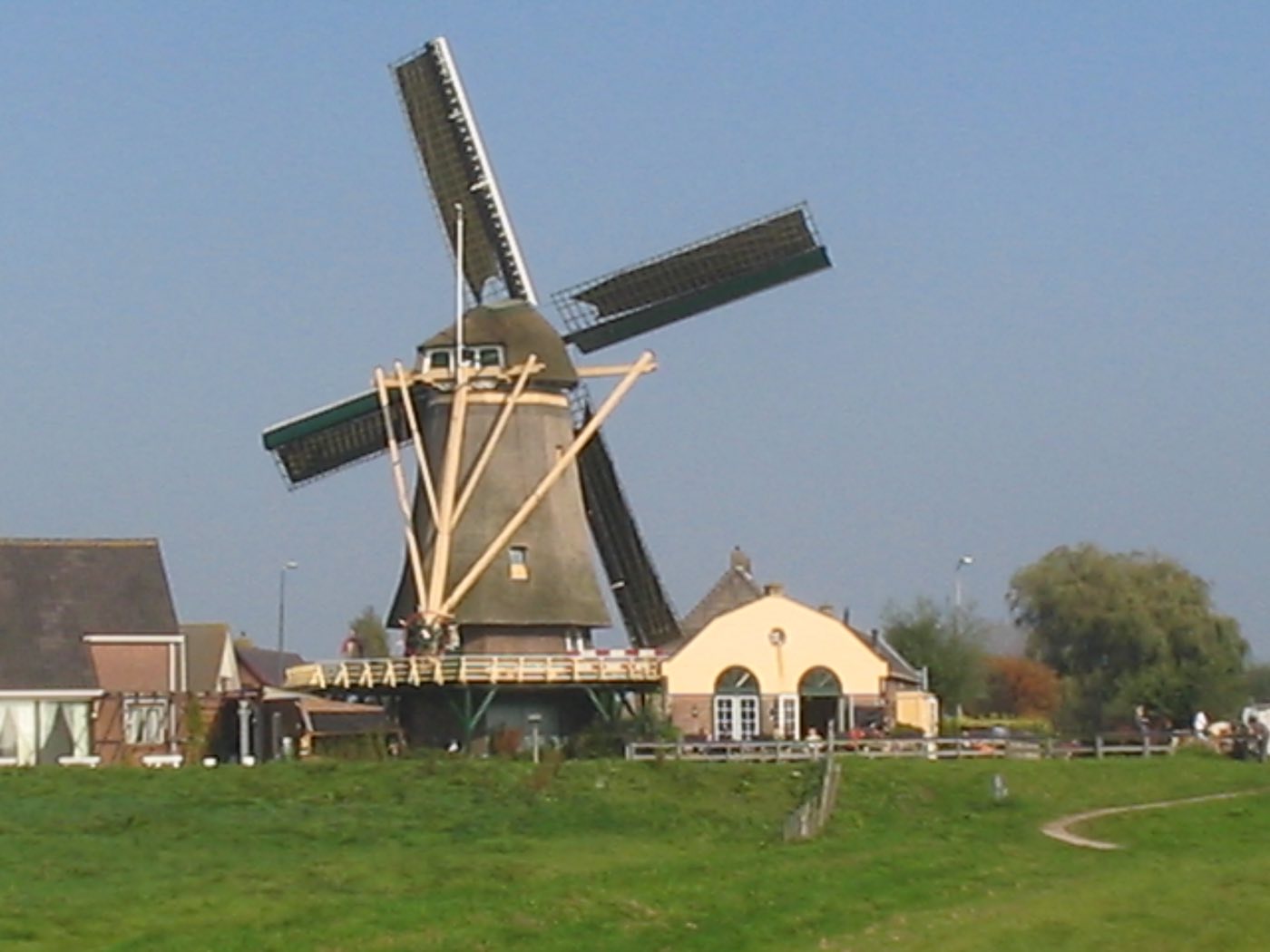
In the sixteenth century large-scale peat extraction also began in Nootdorp, alongside Pijnacker. Peat was the only major fuel for households and breweries; villages on peat had a treasure chest beneath their feet. But every block of peat removed meant the surface dropped. That subsidence is still visible in the polder pattern around the village. The photo above shows Molen Windlust, built in 1781 as a corn mill — one of the symbols of Nootdorp's past.
Until well into the twentieth century Nootdorp remained largely agricultural: dairy cattle, some horticulture, some arable farming. Only with the merger with Pijnacker in 2002 did it officially become part of Pijnacker-Nootdorp. Meanwhile the village had grown with new neighbourhoods like 's-Gravenhout and Craeyenburg, so it is now mainly a quiet residential place — lots of greenery, lots of water, lots of room for cycling.
Living in Nootdorp, you know: the upside is the calm, the downside is that everything is just a bit further away. But the laundry doesn't have to go far. We run set pickup days through the village — Centrum, 's-Gravenhout, Craeyenburg. Your bag hangs out in the morning, and in the evening it's back on your door, clean and ironed, with the same driver as last time. Not different, just easy.
How Wastas works in Nootdorp
On the set pickup day our driver is at your door. Clean laundry comes back by appointment — folded or on hangers, however you like it.
Other municipalities nearby
Sign up in two minutes and schedule your first pickup.