

Rijswijk has sat for almost a thousand years on the threshold between The Hague and Delft. When the Delftse Vliet was dug around 1150, mills soon stood along this new waterway — for sawing wood, pressing oil and, closest to what we now do, processing wool. Anyone with wool or linen from the polders around Rijswijk could easily ship it via the Vliet to market in Delft or The Hague.
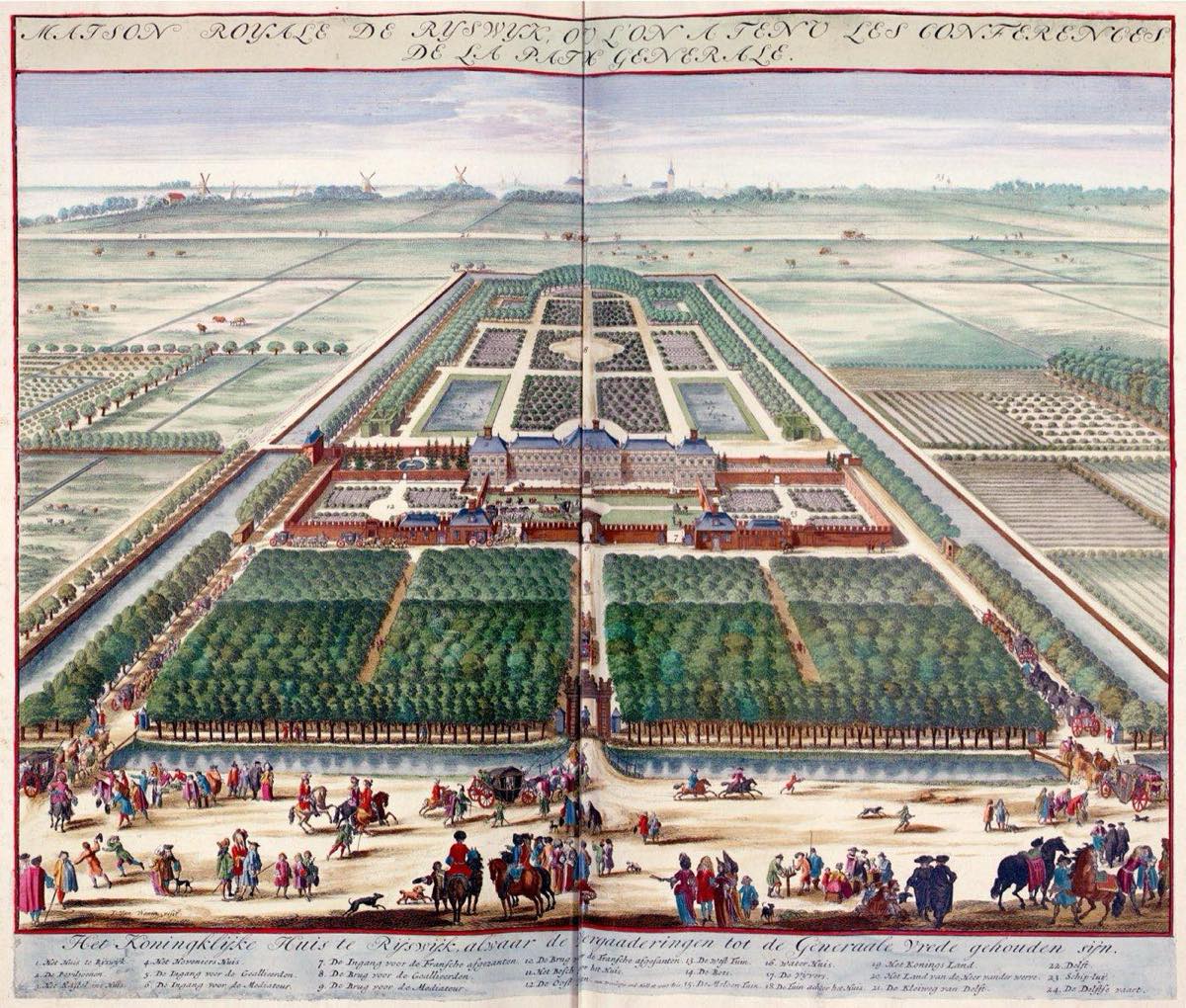
In 1697 Rijswijk briefly became the centre of Europe. At Huis ter Nieuwburg, the country estate that Stadtholder Frederik Hendrik had built between 1630 and 1636, the Treaty of Rijswijk was signed — ending the Nine Years' War. The engraving above, by P. Schenck, captures those weeks: carriages on the forecourt, diplomats coming and going, a country estate temporarily a diplomatic capital. The country estates in Rijswijk — Huis ter Nieuwburg, Welgelegen, Sion, Steenvoorde — formed in the seventeenth century a wealthy ring of houses, each with its own laundry, sewing and ironing household.
Between those estates and the city lay polders worked on a small scale until well into the twentieth century. Rijswijk was long a village between two cities — large enough for its own industry, small enough not to be swallowed up. That independent character has remained, even as The Hague tried again and again to annex it from 1896 onwards.
Today Rijswijk is mostly working: commuters, families, freelancers. The week is full, and laundry is not among the things that still have time. That's why we run set mornings through the Plaspoelpolder, Oud-Rijswijk and the neighbourhoods around Julianapark. Your bag hangs out in the morning, and comes back in the evening clean, ironed and neatly folded. Same driver, same time, every week.
How Wastas works in Rijswijk
On the set pickup day our driver is at your door. Clean laundry comes back by appointment — folded or on hangers, however you like it.
Other municipalities nearby
Sign up in two minutes and schedule your first pickup.