

Waddinxveen arose in 1233 as a peat-reclamation village. On 20 April of that year Floris IV, Count of Holland, sold a strip of peatland along the Gouwe to Nicolas van Gnepwijk; the area was named 'Waddinxvene'. From that moment on residents began reclaiming the wet peat: long, narrow plots, ditches to the Gouwe, farms along the drainage ribbon. The village grew slowly within what the water allowed.
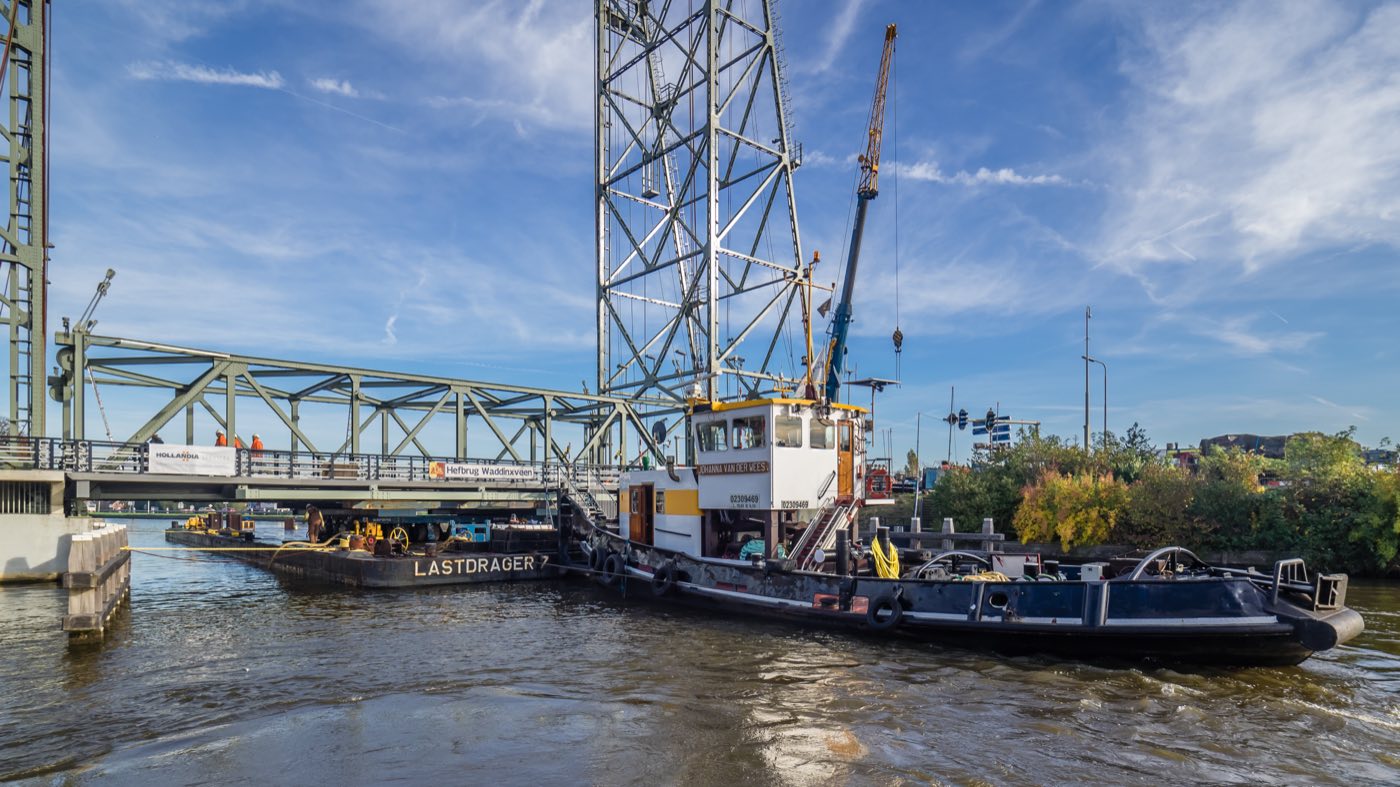
Around 1500 large-scale peat extraction began. Peat was dredged from below the water table, leaving great peat lakes behind. The Gouwe was canalised to allow shipping, and that waterway determined the village economically. Many Waddinxveners earned their living from shipping: as skippers, builders, suppliers to ship-carpentry yards. The lift bridge in the photo above, built in 1936 and now a national monument, is the most visible heritage of that Gouwe tradition.
Alongside shipping and peat reclamation, twentieth-century Waddinxveen was mainly a residential village: commuters to Gouda, Rotterdam and later Alphen found affordable homes with plenty of space here. From the 1980s neighbourhoods like Zuidplas and Triangel were added, growing the village considerably without entirely losing its rural character. Today Waddinxveen has about 30,000 inhabitants, a lift bridge, a kayak island and a municipality-wide greenhouse cluster.
Living in Waddinxveen means the Gouwe is still within reach and the A12 not far away. Working outside the village, living inside — that's the rhythm for many residents. We run set pickup days through the municipality — centre, Zuidplas, Triangel, Groenswaard. Your bag is ready in the morning, and comes back in the evening clean and ironed with the same driver. A service that fits a village that has worked to the rhythm of the Gouwe for eight centuries.
How Wastas works in Waddinxveen
On the set pickup day our driver is at your door. Clean laundry comes back by appointment — folded or on hangers, however you like it.
Other municipalities nearby
Sign up in two minutes and schedule your first pickup.